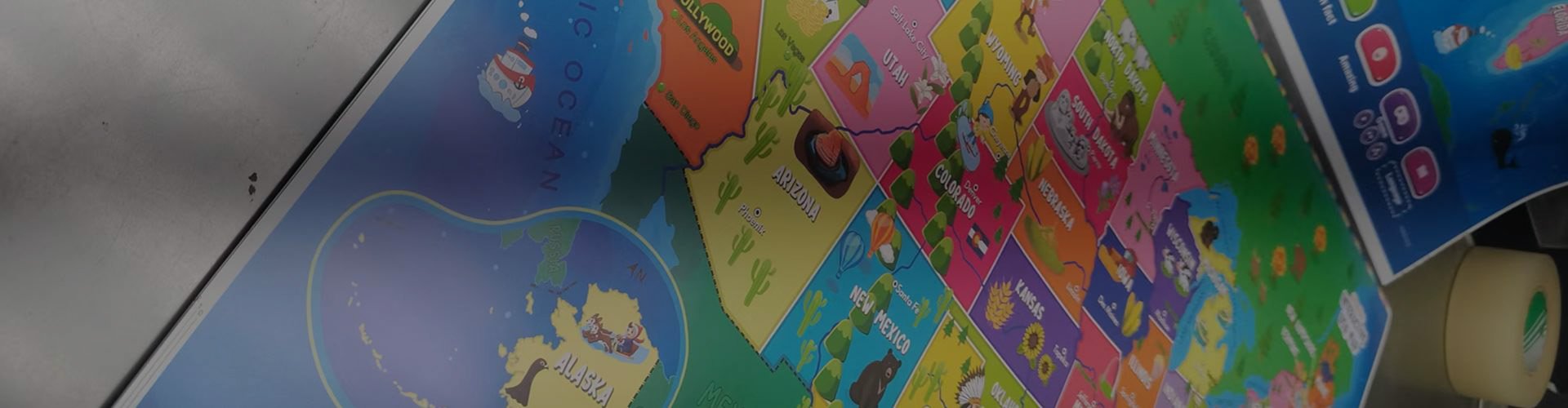
Printing involves applying color to blank paper, using four-color (CMYK) process printing. If Pantone colors (such as for company logos), gold, silver, or other special inks are required, please be sure to specify. Then we will use 5 or 6 colors instead of four, and we can give you the right quotation.
Printing Process
Artworks Processing → Blueline Proofing → CTP(computer-to-plate) → Printing
Elizabeth L. Eisenstein, in The Printing Press as an Agent of Change, explains that printing made knowledge much cheaper to get. Because of this, the writings of many more people could spread widely and continue to influence later generations.
Offset Printing
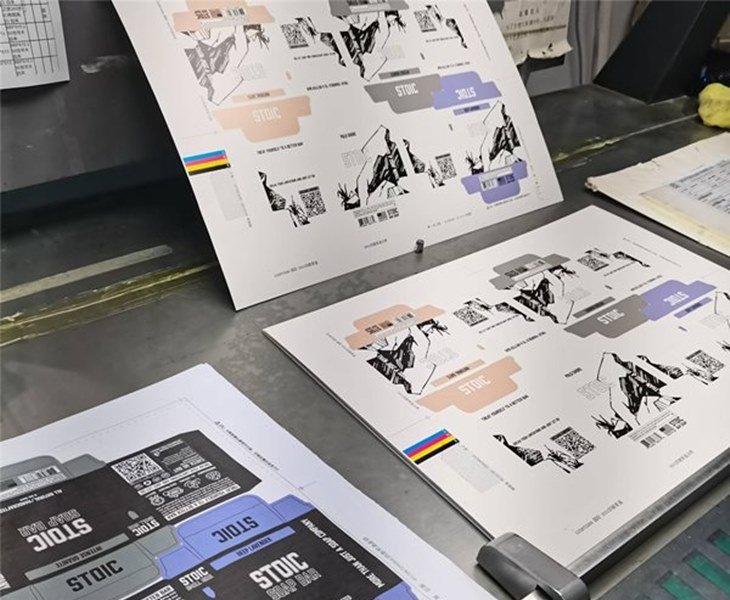
Offset printing is also called litho printing. It is simple and not expensive in commercial printing, used to clearly print product information and logos on a wide range of materials such as paper, box packaging, greeting cards, and shopping bags.
It produces sharp, high-quality prints and becomes highly cost-effective for large-volume orders. This method also allows for precise color adjustment and Pantone color printing.
Presses come in various sizes, including 8-up, 4-up, half-size, and full-size machines. Color configurations are flexible, ranging from single-color and standard four-color (CMYK) presses to multi-color systems such as five-color, six-color, or eight-color presses.
Offset printing performs best on smooth paper with weights up to 450gsm. We use CTP platemaking to output digital files directly onto PS plates—typically a set of four for full-color printing—which involves plate setup costs. Additionally, on-press adjustments for color matching and alignment incur machine setup fees.
Compared to digital printing, offset offers superior print quality, faster running speeds once set up, and the ability to print on larger sheet sizes.
Digital Printing
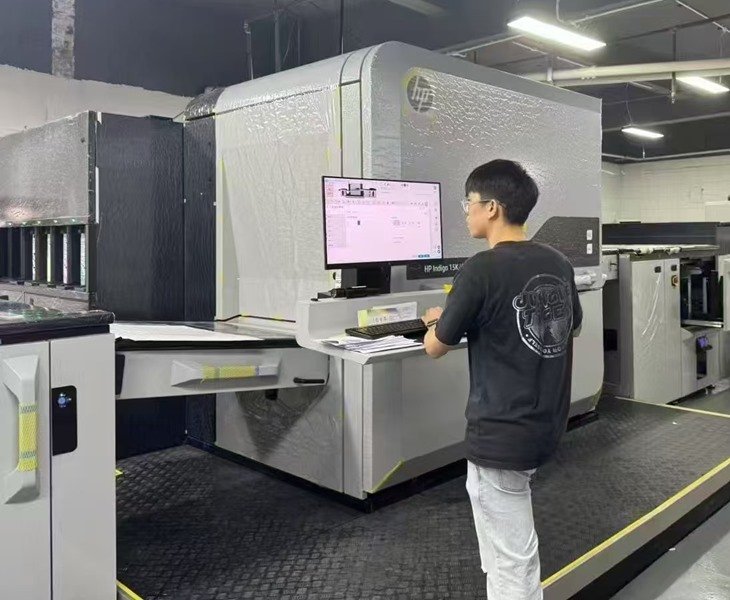
Digital printing machines are typically from brands like HP or Canon, which do not require traditional PS printing plates. Designs can be produced directly from digital files, similar to how an office printer operates, using four standard ink colors (CMYK). In terms of print quality, digital printing accurately reproduces colors, delivers sharp text, and captures fine details—making it especially suitable for logos, gradient backgrounds, and intricate patterns. However, unlike offset printing, it does not allow for real-time color adjustment during the printing process.
Digital printing is ideal for small-batch orders and prototypes. In my view, it is less efficient for large-volume production compared to traditional offset printing, and color consistency may also vary across bigger runs. All of our product samples are produced using digital printing due to its low cost and fast turnaround.
UV Printing
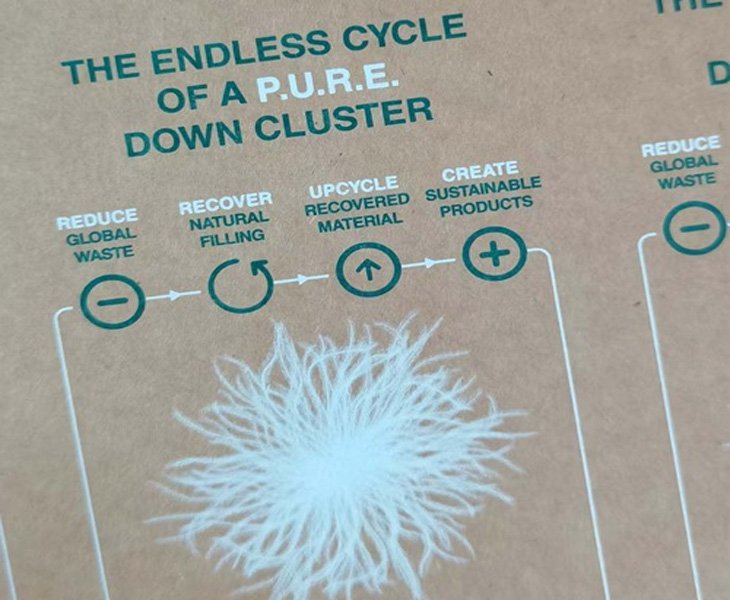
Printing bright white on brown kraft paper is where UV printing truly shines. Since Kraft paper’s dark color shows through easily, we print white ink twice, like applying two coats of paint. The first layer blocks the brown background; the second builds a solid, snow-like white that makes logos pop. This turns a naturally friendly paper into rustic-chic packaging!
UV printing works especially well on shiny metallic papers—think mirror-like gold, silver, or holographic cardstock.
UV printing provides inks with instant-drying power—special liquids solidify into a rock-solid state under UV light in seconds. No more waiting hours for prints to dry!UV printing machines cost more upfront. However, they reduced production time by 30% or more by skipping certain drying steps.